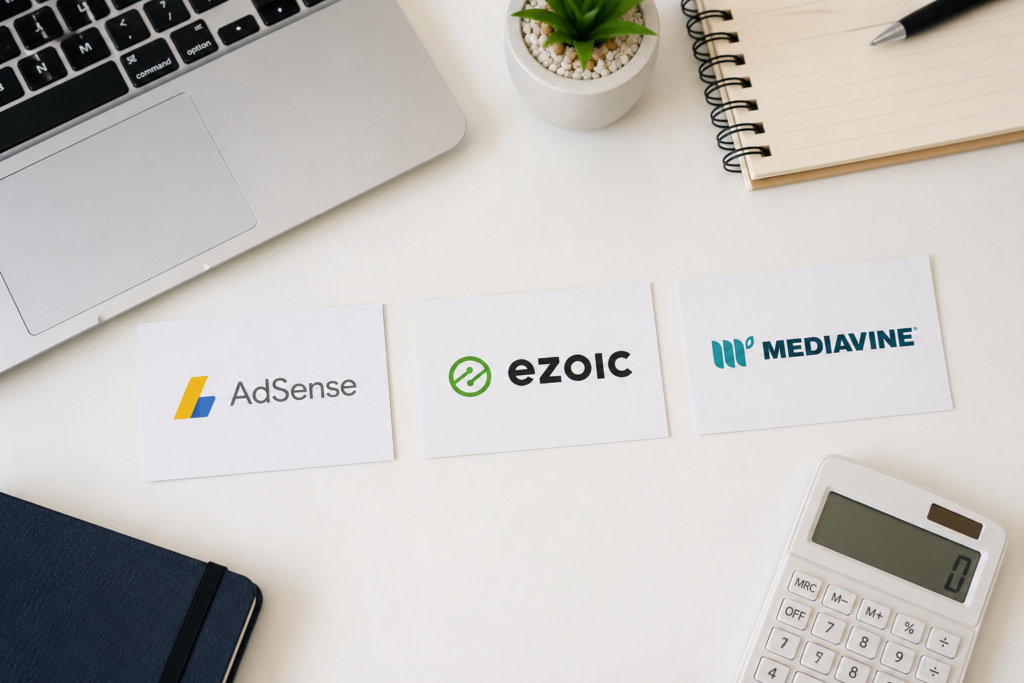
AdSense vs Mediavine vs Ezoic: Which Ad Network Is Right for Your Blog

If you have been running AdSense for a while and your RPM still sits under $5, you are probably leaving money on the table. AdSense is a solid starting point, but it is not designed to be the final stop for a growing blog. Mediavine and Ezoic both exist specifically to pay publishers more for the same traffic.
The confusing part is knowing which one fits your site right now. Each network has different traffic requirements, different niche strengths, and different RPM ranges. Picking the wrong one at the wrong stage wastes time and, in some cases, locks you out of better options later. This guide breaks down all three so you can make a decision based on where your site actually stands today.
Quick Overview Before We Compare
All three platforms monetize your site through display ads, but they operate very differently behind the scenes.

RPM Comparison: Which Pays More
This is the number most publishers care about. Based on aggregated 2026 data from multiple publisher reports, here is what each network typically pays across niches.
| Network | Typical RPM | Best For | Traffic Needed |
| AdSense | $1 to $5 | New blogs, any niche | No minimum |
| Ezoic | $5 to $15 | Growing mid-size sites | No minimum, 1,000+ recommended |
| Mediavine | $15 to $40+ | Lifestyle, food, finance, travel | 50,000 sessions or Journey at 1,000 |
Real publisher data backs this up. One blogger documented their AdSense RPM stuck under $10 despite a 40 percent traffic increase, then saw revenue jump significantly after switching networks. Another report comparing niches found finance sites moving from $8 to $12 RPM on AdSense up to $25 to $45 on Mediavine, while lifestyle sites saw RPM climb from $3 to $6 up to $12 to $20.
These numbers vary by niche, traffic geography, and season, but the pattern holds across almost every comparison: Mediavine consistently delivers the highest RPM, Ezoic sits in the middle, and AdSense remains the entry point.

Traffic Requirements: Can You Even Apply
RPM potential means nothing if you cannot get approved. Here is what each network actually requires in 2026.
AdSense
No traffic minimum. You can apply with a brand new site as long as you meet Google’s content and policy requirements. This makes it the only realistic option for sites under a few thousand monthly visitors.
Ezoic
Ezoic removed its historical 10,000 pageview minimum through its Access Now program. Technically you can join with very little traffic, though the platform recommends at least 1,000 monthly visits so its AI testing has enough data to optimize properly.
Mediavine
Mediavine’s standard tier requires 50,000 sessions in the last 30 days, measured through Google Analytics 4. Sessions are not the same as pageviews, since a session groups multiple interactions within a 30 minute window, so this threshold is somewhat more achievable than it sounds. Mediavine also launched a Journey tier in 2026 that lowers the requirement to just 1,000 sessions for newer publishers, though earnings on Journey average lower than the full Mediavine program.
Mediavine also has content and traffic source requirements beyond the session count. Your traffic needs to be organic and genuine, your content must be original and high quality, and you need to already be in good standing with AdSense.



Niche Fit: Where Each Network Performs Best
RPM is not just about the network. It is about how well your niche matches the network’s advertiser base.
If your blog covers a niche like personal finance or technology, AdSense and Ezoic often perform closer to what you would expect from their general benchmarks, since Mediavine’s advertiser strength is more concentrated in lifestyle categories.

Site Speed and User Experience Impact
Ad networks affect more than revenue. They affect how your site feels and performs for visitors.
AdSense has minimal performance impact since it is a lightweight script. Ezoic historically caused noticeable slowdowns due to its JavaScript injections, though this has largely improved with its newer Leap technology, especially when configured correctly through Cloudflare at the DNS level.
Mediavine and Raptive are both engineered for minimal speed impact and tend to maintain strong Core Web Vitals scores when implemented properly, since they manage placements directly rather than relying on heavier client-side testing scripts.

Exclusivity Requirements
This is a detail many publishers overlook before applying. AdSense and Ezoic can technically run together through ad mediation. Mediavine, on the other hand, requires full exclusivity over your display ad inventory. You cannot run AdSense or Ezoic alongside Mediavine.
You are still allowed to use affiliate links and sponsored content alongside Mediavine, since those are separate from programmatic display advertising. But if you are not ready to give up your existing ad setup entirely, that exclusivity clause matters.
Payment Terms
| Network | Minimum Payout | Payment Schedule |
| AdSense | $100 | Net 30 |
| Ezoic | $20 | Net 30 |
| Mediavine | $25 | Net 65 |
Mediavine pays slower than the other two, which is worth factoring into your cash flow planning if you depend on this income regularly.
Which One Should You Choose Right Now
The honest answer depends entirely on your current traffic level, not on which network sounds the most impressive.
Do not wait until your traffic is massive before upgrading. Ezoic and Mediavine Journey exist specifically so smaller publishers can access better RPM earlier instead of staying on AdSense out of habit.
Final Verdict
AdSense remains the right tool for brand new sites with no traffic history. Ezoic is the smartest stepping stone once you clear a few thousand monthly visitors, since there is no real reason to stay on AdSense alone after that point. Mediavine is the clear upgrade once you hit 50,000 sessions, particularly if your niche aligns with lifestyle, food, travel, or finance.
If you are currently sitting at a low RPM despite decent traffic, your network choice might be the single biggest lever available to you. Before switching, make sure your site is in good standing with AdSense and your traffic is genuinely organic, since this affects approval odds across all three platforms.
To understand why your current RPM might be lower than expected before switching networks, read our guide on what RPM is and what factors affect it. And once you are ready to apply, our detailed breakdown of Mediavine requirements walks through the exact approval checklist.
Isla Smith is a digital publishing strategist based in Sheridan, Wyoming. She writes about ad monetization, RPM optimization, and publisher growth strategies at Adpro Technologies.